

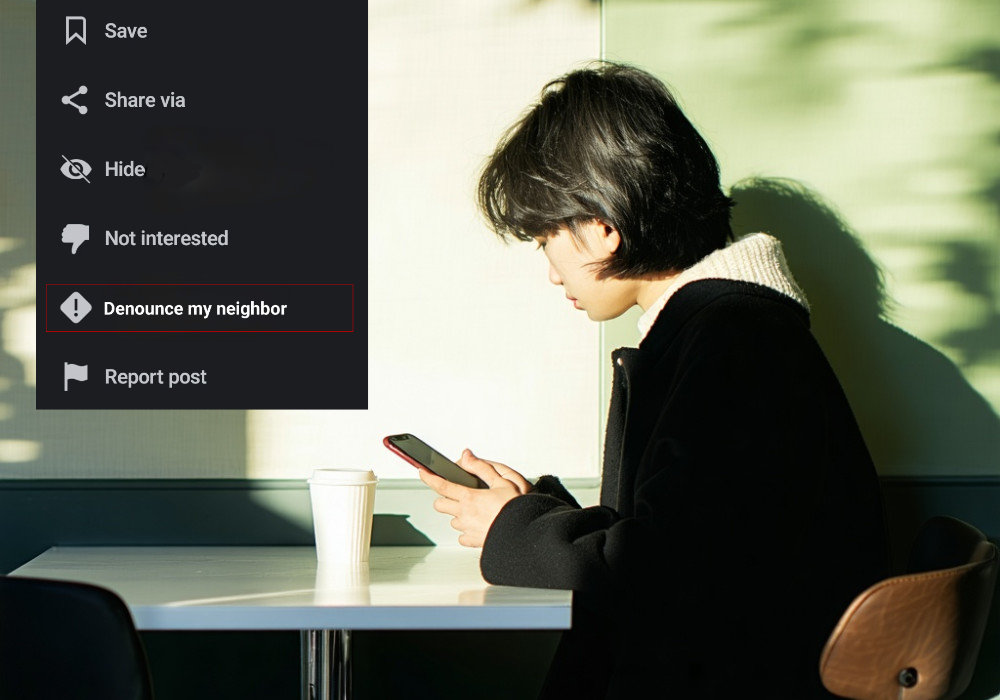
The menu literally says, Seems like AI slop.
LinkedIn, built entirely on automation, algorithmic content sorting and machine learning recommendations, now wants its users to flag AI content. The irony!
The Behaviour Modification Game
Think about what's happening beneath the surface. LinkedIn captures human attention. That's the product. Humans creating content used to require either expensive ghostwriters or hours of personal effort. But AI changed that equation overnight. Suddenly anyone could produce volume, and volume threatens the scarcity model that keeps premium subscriptions valuable.
So they introduced the slop button.
It reminds me of something darker. Maoist China had a system called denunciation. Citizens reported on neighbours for ideological impurity. The parallel isn't perfect but the mechanism is similar. Platforms training users to police each other. To identify and flag the "wrong" kind of content. To feel virtuous about reporting.
The Uncomfortable Truth About AI Content
LinkedIn runs on AI. The feed algorithm decides what you see. Suggested connections come from machine learning models. Job recommendations, content boosting, engagement predictions. All AI. The entire infrastructure depends on it.
Removing AI-generated content would gut the platform's own operations. They know this. What they want is control over which AI gets used and how.
When someone uses AI lazily, pumping out generic motivational quotes with stock photos and no original thought, that degrades the experience. I get it. Nobody wants to scroll through walls of "Here are 5 tips for crushing your Monday" posts that read like they came from the same template.
But AI used with intention? With genuine expertise feeding the prompts? With human judgment shaping the output? That's different.
The Coach's Dilemma
I talk with coaches every week who face an impossible choice. They can spend four hours crafting a single LinkedIn post, hand-wringing over every word, publishing maybe twice a week if they're disciplined. Or they can use AI tools and risk being flagged as slop merchants by strangers who've never met them.
Meanwhile their competitors with bigger budgets hire content teams. Those posts look human because humans touched them. The AI assistance behind the scenes stays invisible.
The playing field was never level. AI briefly made it more accessible. Now platforms are tilting it back.
What Good AI Assistance Looks Like
I've spent months building systems that eliminate the tells. The corporate jargon. The stacked buzzwords. The rule of three that screams "a robot wrote this." The throat-clearing openers. The fake enthusiasm.
When you strip away those patterns, something interesting happens. The AI becomes a collaborator instead of a replacement. Your voice comes through. Your expertise shapes the message. The machine handles the mechanics of putting words in order while you provide the substance.
This is what we built into Promana Reach. Not a content mill. A voice amplifier.
The Difference Between Slop and Scale
Slop is lazy. Someone types "write me a LinkedIn post about leadership" and hits publish on whatever comes back. No editing. No personal insight. No connection to their actual work or clients.
Scale is different. Scale means taking your real ideas, your genuine expertise, your specific perspective on your industry, and getting help expressing them consistently. Across platforms. Week after week. Without burning out.
I wrote this post by hand. Took me about forty minutes. I could have used Reach to draft it in three minutes, spent ten minutes editing to make sure it sounds like me, and used the remaining half hour to have coffee with my daughter.
Both versions would carry my thinking. Both would connect with the coaches and consultants I'm trying to help. One just costs me more time.
The Real Question
Platforms will keep adjusting their rules. They'll introduce new buttons, new flags, new ways to shape behaviour. That's their prerogative.
Your question is simpler. How do you show up consistently for the people you serve? How do you stay visible without sacrificing the rest of your business? How do you compete with larger operators who have resources you don't?
We built Reach to answer those questions. The demos at promanapeople.com/explore/reach show exactly how it works. No magic. No promises of viral growth. Just tools that let your voice travel further than you could carry it alone.
The slop button will catch the lazy operators. It won't touch the thoughtful ones. 🎯