

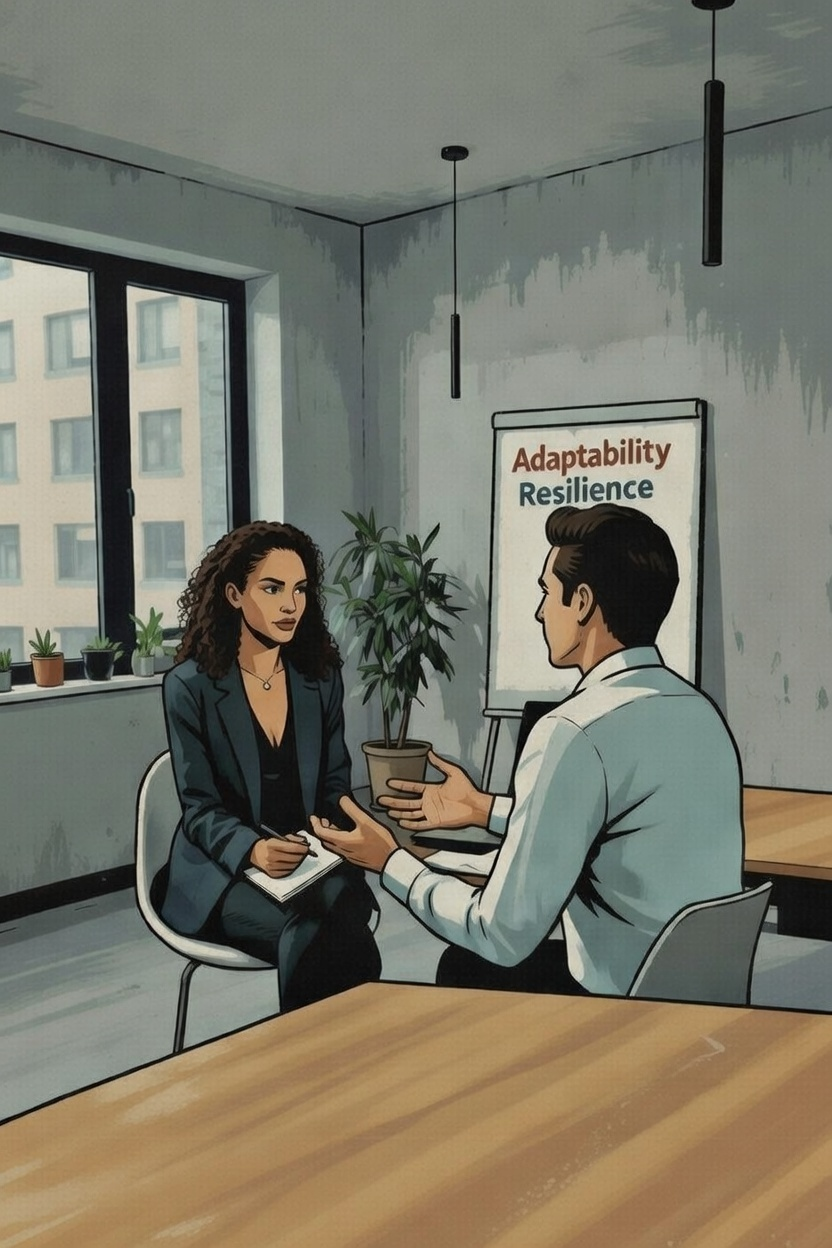
As coaches working with career transitions, emerging leaders, executives, and teams, we continually seek ways to move conversations beyond the surface, toward the kind of insight that genuinely reshapes how people see themselves and operate in the world. One of the most reliable paths to that depth lies in observable behaviour: the actual patterns of action, response, and interaction that emerge in real situations, rather than in ideals or intentions.
These patterns are not fixed labels or personality types; they are dynamic indicators - living evidence of how someone collaborates under tension, adapts when the ground shifts, influences without force, or recovers from missteps. A well-placed question such as “Tell me about a time you navigated a significant team change” does more than elicit a story; it gently opens a window into consistent tendencies in resilience, decision-making, and relational style. The beauty is that this approach never overrides the natural flow of a session. Conversations can and should wander into whatever feels alive and relevant that day. Yet when the dialogue risks drifting into abstraction, returning to observable actions provides a quiet, steady anchor: “What did that look like in practice?” or “How did you respond in the moment?” These small pivots often reveal layers that might otherwise take many sessions to reach.
For coaches supporting individuals just starting out or leveling up, this lens brings early clarity. A client might describe settling into a new role (“What helped you learn the ropes quickly?”), and the details that emerge - proactive seeking of feedback, preference for structure or autonomy, comfort with ambiguity - begin to form a picture of their natural operating mode. These are not judgments; they are data points that allow the client to claim strengths they may have overlooked and address gaps with precision.
In leadership and executive coaching, the same principle illuminates style and impact. Exploring “Tell me about your approach to delegating tasks” can surface how a leader balances control with trust, how they read team energy, and where their instincts either amplify or constrain collective performance. Similarly, reflecting on “Describe motivating a group through a tough stretch” often highlights relational patterns - empathy under pressure, clarity in uncertainty, or the subtle ways influence is exerted - that shape team culture more than any stated philosophy ever could.
When preparing clients for interviews or high-stakes transitions, the focus on observable behaviour adds intellectual weight. A question like “Give an example of thinking on your feet to solve an urgent issue” draws out decision-making under constraint; “Tell me about persuading a stakeholder to your viewpoint” reveals influence style. These explorations help clients articulate their value not as generic competencies, but as lived patterns that hiring managers can recognise and trust.
For team coaching, the same behavioural curiosity extends outward. Asking one member to describe “a time you resolved a coworker conflict” while inviting others to reflect on similar moments can reveal shared dynamics - communication flows, conflict tolerances, mutual accountability - without forcing consensus. The result is often a collective “aha” that shifts the entire system.
What makes this approach enduring is its quiet respect for complexity. It invites coaches to explore rather than diagnose, to listen rather than interpret too quickly, and to let the client’s own actions tell the story. By centering observable behavior, we create space for conversations that feel both grounded and expansive - conversations that honor the full humanity of the person in front of us while gently revealing the patterns that hold the greatest potential for growth.
In practice, this is less about adding a new technique and more about sharpening the lens we already use. When we consistently return to what actually happened, how it felt, and what followed, the noise quiets. The essential becomes visible. And from that clarity, real transformation - personal, relational, organisational - begins to unfold naturally.